Why Sophisticated Investors Are Paying Attention to Southeast Real Estate
The Southeast United States is no longer simply a high-growth region. It has become one of the most closely analyzed real estate markets among institutional investors, family offices, and private wealth groups.
For sophisticated investors, the opportunity is not just about identifying a growing market. It is about understanding which submarkets, asset classes, and operating partners are positioned to create long-term value.
The current cycle has created a more selective investment environment. Rising construction costs, changing interest rates, and shifting capital markets have increased the importance of disciplined underwriting and experienced execution.
Family offices evaluating real estate opportunities today are asking deeper questions:
- Is population growth sustainable?
- Is housing demand supported by employment growth?
- Is supply becoming more disciplined?
- Does the sponsor have the operational capabilities to execute?
The Southeast continues to stand out because it combines demographic momentum with long-term housing demand.
Why Institutional Capital Continues Moving Toward the Southeast
According to the CBRE North America Investor Intentions Survey, investor interest in real estate remains strong as capital seeks opportunities supported by durable fundamentals.
The Southeast has benefited from several structural trends:
- Corporate relocations
- Population migration
- Employment growth
- Expanding infrastructure
- Relative affordability compared with coastal markets
For family offices, these trends matter because long-term real estate performance is ultimately driven by population, jobs, and housing demand.
The region’s growth is not concentrated in one city. It extends across interconnected markets including Charlotte, Nashville, Atlanta, and high-growth Carolina submarkets.
Charlotte and the Carolina Growth Corridor: Why Submarket Selection Matters
Charlotte has become one of the Southeast’s most closely watched investment markets.
However, sophisticated investors understand that metro-level growth alone does not determine investment outcomes.
The strongest opportunities often come from identifying the right submarkets within a larger growth corridor.
The Charlotte region, including areas such as Concord, Rock Hill, Fort Mill, and Indian Land, benefits from:
- Expanding employment centers
- Continued population inflows
- Business-friendly economic conditions
- Demand for housing near major job nodes
According to the PwC and ULI Emerging Trends in Real Estate Report, the Southeast continues to rank among the strongest regions for real estate prospects due to favorable demographic and economic conditions.
For investors, the opportunity is not simply selecting Charlotte.
It is understanding where within Charlotte and surrounding markets supply, demand, and basis create the strongest risk-adjusted opportunities.
Multifamily: A Long-Term Housing Demand Strategy
Multifamily remains one of the most established private real estate investment strategies because it addresses a fundamental need: housing.
Long-term demand drivers include:
- Population growth
- Household formation
- Housing affordability challenges
- Employment expansion
As homeownership becomes increasingly difficult for many households, professionally managed rental communities continue to play an important role.
However, experienced investors recognize that not every multifamily opportunity is attractive.
Successful outcomes depend on:
- Acquisition basis
- Supply analysis
- Location quality
- Operating strategy
- Sponsor execution
The difference between an average investment and a strong investment often comes down to underwriting discipline.
Build-to-Rent: Where Housing Preferences and Demographics Meet
Build-to-rent has evolved into a significant institutional real estate strategy.
The sector addresses a growing group of renters seeking:
- More space
- Private outdoor areas
- Community amenities
- Flexibility without ownership responsibilities
The Southeast has become a major BTR market because many growth markets combine:
- Strong population growth
- Land availability
- Housing affordability challenges
- Demand for single-family living
For family offices evaluating BTR opportunities, the key consideration is not simply the asset class.
It is whether the market fundamentals support long-term absorption and whether the operator has the expertise to execute effectively.
Active Adult Housing: A Demographic Opportunity in the Southeast
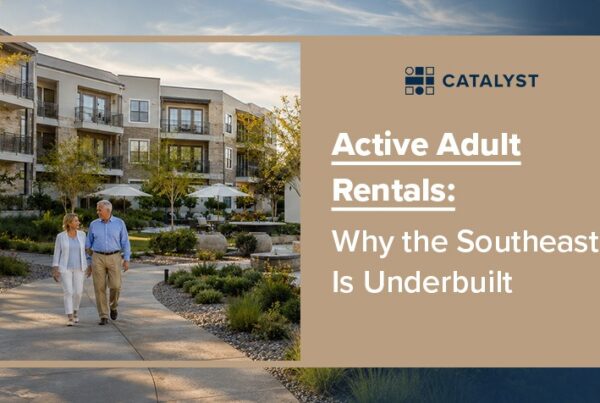
One of the emerging areas receiving increased attention is active adult rental housing.
The aging Baby Boomer population is creating demand for communities designed around:
- Lifestyle
- Convenience
- Amenities
- Community engagement
Unlike traditional senior housing, active adult rental communities focus on independent residents seeking a maintenance-free lifestyle.
For investors, this segment represents a demographic-driven opportunity where demand growth is supported by long-term population trends.
The Risks Family Offices Should Evaluate Before Investing
Sophisticated investors do not evaluate opportunities based only on upside potential.
They focus equally on risk management.
Submarket Supply Risk
Strong metro growth does not mean every submarket performs equally.
Investors should evaluate:
- Current pipeline
- Future deliveries
- Competitive positioning
- Absorption expectations
Interest Rate and Financing Risk
Higher financing costs have changed the investment environment.
Disciplined sponsors evaluate:
- Conservative leverage
- Debt structure
- Refinancing scenarios
- Interest rate sensitivity
Construction and Development Risk
Ground-up development creates opportunities but requires strong execution.
Important considerations include:
- Contractor relationships
- Cost management
- Permitting timelines
- Local expertise
Operating Cost Pressure
Insurance, taxes, and operating expenses have become increasingly important underwriting considerations.
Successful sponsors must understand how these variables impact long-term performance.
What Family Offices Should Look for in a Southeast Real Estate Partner
Market selection is only one part of the investment decision.
The operating partner is equally important.
Family offices evaluating private real estate opportunities should consider:
✓ Local market expertise
✓ Transparent communication
✓ Disciplined underwriting process
✓ Alignment of interests
✓ Experience managing assets through different cycles
✓ Ability to execute from acquisition through stabilization
Catalyst focuses on selective real estate partnerships across multifamily, build-to-rent, active adult, mixed-use, and affordable housing strategies throughout the Southeast.
The firm's approach centers on disciplined underwriting, local execution, and long-term partnership rather than broad retail fundraising.
Frequently Asked Questions
Is the Southeast still a strong real estate market in 2026?
The Southeast continues to benefit from population growth, employment expansion, and housing demand. However, investors must evaluate individual markets and sponsors carefully rather than relying only on regional trends.
Why are family offices interested in Southeast multifamily?
Multifamily provides exposure to long-term housing demand supported by demographic trends, employment growth, and affordability challenges in the ownership market.
What makes Charlotte attractive for real estate investment?
Charlotte benefits from corporate growth, population migration, expanding employment centers, and continued demand for residential housing.
Is build-to-rent a good investment opportunity?
Build-to-rent can provide exposure to changing housing preferences, but investment outcomes depend on market selection, basis discipline, and operator execution.
What risks should investors consider before investing in Southeast real estate?
Key considerations include supply levels, financing conditions, construction costs, insurance expenses, and sponsor execution capability.
A Disciplined Approach to Southeast Real Estate Investing
The Southeast continues to offer compelling opportunities for investors who approach the market with discipline and a long-term perspective.
For family offices and accredited investors, successful real estate allocation is not about following market momentum.
It is about partnering with experienced operators who understand local markets, evaluate risk carefully, and execute consistently.
Catalyst works with private investors and institutional partners seeking exposure to Southeast real estate opportunities through relationship-driven partnerships and disciplined investment strategies.
Explore Catalyst’s market insights and approach to understanding opportunities across the Southeast real estate landscape.

 0
0